How would you react if I told you that Gang Form has more than 20 years of history in Vietnam?
You might be surprised and think: “Really? Are you sure this is Vietnam, not Korea?”
But the truth is, Gang Form has been used in Vietnam for more than 20 years.
One of the earliest examples was the Nha Trang Dock project in 1997. The project was constructed by Hyundai, while the Gang Form system was supplied by Sammok, with a value of more than 1 million USD at that time.
During the following years, Gang Form was used only “sparingly” on a few high-rise buildings.
Notable examples include:
- Keangnam Hanoi Landmark Tower, supplied by Hyundai & Kumkang Kind in 2008;
- Landmark 81 by Kumkang Kind in 2018.
It was not until recent years that Gang Form became more widely used, especially in the Vincity project chain of Vingroup.
And you are probably one of many people who want to learn more about this modern formwork system.
But first, let’s understand the basics.
Nội dung chính:
What is a gang form?

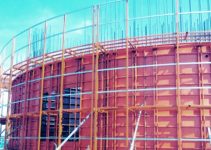
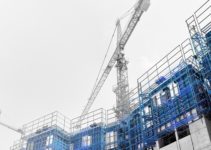
Gang Form is a formwork system used for the exterior of a building. It combines large Steel Form panels with a working platform system to create large monolithic formwork units.
Gang Form is connected to the concrete structure by anchors. The system can be lifted along the height of the building and normally works across 2-4 floors under construction.
The Gang Form is connected to the internal formwork system (aluminum formwork, Euroform, ..) by Sepa Tie through pre-made holes on the surface of the Gang Form.
Gang Form is also known as a Climbing Formwork System. This type of Climbing System is normally operated by a tower crane.

Advantages of gang form
When conventional formwork is used, additional safety systems are often required before, during and after concrete pouring.
Therefore, a scaffolding system is usually installed and maintained throughout the height of the building.
However, much of this scaffolding is not required when using Gang Form.
Safety
When using traditional formwork or aluminum formwork, external scaffolding is normally required. This may increase the risk of installation errors and accidents.
In addition, worker productivity can decrease at greater heights. Working conditions may also be affected by weather, especially strong wind and rain.
Gang Form can reduce these disadvantages. The system is installed and connected according to engineering calculations to ensure safety.
The working platform and protective “cage” provide workers with a safer and more comfortable working environment, which can significantly improve productivity.
At the same time, the system helps reduce the risk of construction materials and equipment falling from height.
Easily
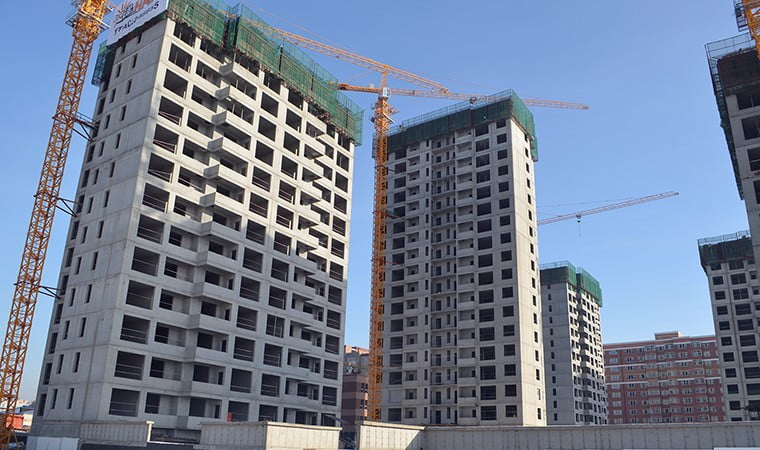
When a building uses traditional formwork and external scaffolding, a large amount of space on the construction site is occupied. As the number of materials increases, arrangement, management, storage and handover become more difficult.
With Gang Form, this disadvantage is greatly reduced. The system mainly needs to be set up during the first 3 to 4 floors.
Thrifty
Erection and dismantling costs can be reduced because less manpower is required for repeated assembly, dismantling and management.
In addition, several construction activities can be reduced. By reducing the need for T-brackets and external scaffolding systems, Gang Form can help lower overall construction costs.
Accuracy
For super-high-rise buildings, concrete quality can become more difficult to control when the building height exceeds 30 floors.
When using Gang Form, this situation can be improved because of the tight connection between the concrete stopper and the adjacent lower floor.
Gang Form also provides a strong connection with the internal formwork system. The system can maintain vertical and horizontal alignment up to the top of the building. Because it is made of steel, it does not swell or shrink like wood formwork.
This helps improve the dimensional accuracy of the concrete structure.
Quickly
When wooden or aluminum formwork is used for the external boundary, scaffolding usually needs to be installed first. This can make it difficult to shorten the construction schedule because scaffolding requires significant manpower.
With Gang Form, assembly and lifting are easier and can make better use of tower crane waiting time. Different construction areas can also be carried out at the same time.
Finishing works can be carried out in parallel in the “tail” area below the Gang Form.
Friendly and aesthetic
Because Gang Form does not require too many additional materials and equipment, construction sites using the system are usually cleaner and more organized.
It also helps reduce construction waste, dust and debris compared with some other formwork methods.
Disadvantages of gang form
- The high initial investment cost is one of the main disadvantages of Gang Form.
- It requires skilled and well-trained workers.
- Tower crane usage may be higher than with some other formwork systems.
- Reusability is relatively limited.
- The working platform width is limited, and its loading capacity must be carefully controlled.
- It is mainly suitable for buildings with external concrete walls and a relatively large number of floors.
- Detailed engineering calculations are required, especially for super-high-rise buildings or projects located in areas with strong wind loads.

Gang form companies are there in Vietnam
According to statistics from Blog Coppha Nhôm, as of the end of 2018, the following Gang Form companies were operating in the Vietnamese market:
- Korean gang form companies: Kumkang, Hyuhdai, Sammok (S-form), Daehan, SFK, Seobo.
- Vietnam gang form companies: Selim, Vietform or VForm (separated from Formtech), Fomrtech, Anh Vu, Illho-IPC and some others.
Epilogue
Gang Form is a modern formwork system with many advantages for high-rise building construction.
In Vietnam, Gang Form is still less common than some other formwork systems because of its initial cost and the technical capability required from contractors.
However, I believe Gang Form will continue to be an important formwork option for high-rise construction in the future.

(Bài viết được cập nhật vào 25/09/2026)